About Me
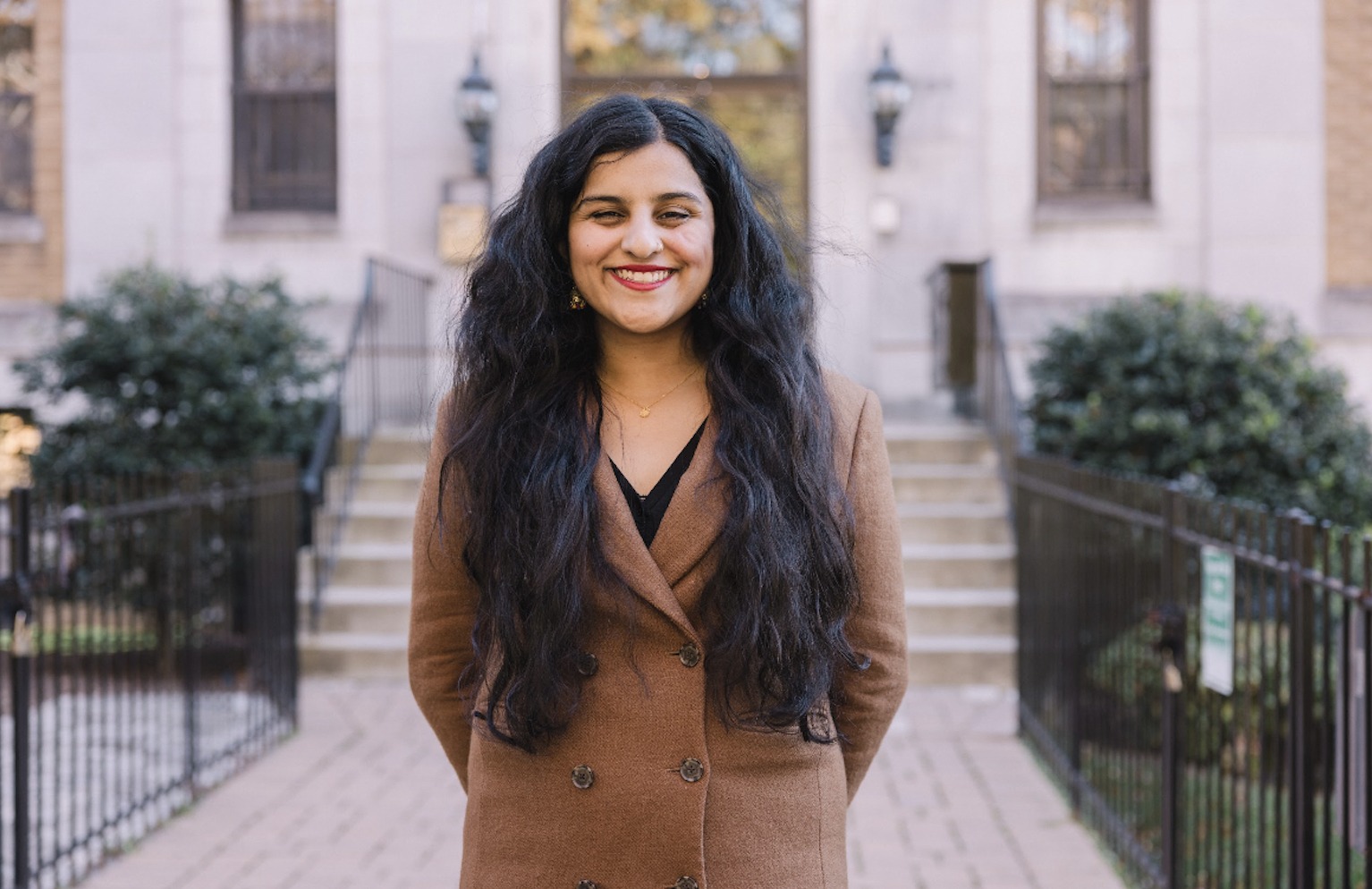
Photo credit: Anang Mittal
Neeraja Deshpande is a writer and editor based in Washington, D.C. She works full-time for Independent Women, a center-right women’s organization, as a policy analyst focusing primarily on education and gender. She is also a senior contributor to IWFeatures.com, Independent Women’s grassroots journalism initiative. Her work has appeared in outlets including City Journal, Pirate Wires, The Spectator, and The Free Press (where she previously worked as a staff researcher), among others.
Neeraja is originally from the Greater Boston area and graduated magna cum laude from all-women’s Wellesley College with a B.A. in Russian.
With the exception of the single year I spent teaching grades 7-12 (academic year 23-24), I’ve spent basically my entire adult life thus far in women’s-only spaces—first at Wellesley College (2019-2023), where I studied Russian and did 7/8 of an economics major (long story) and, since July of 2024, at Independent Women, a center-right women's organization where I work as a policy analyst. It’s more or less why I’m constantly thinking, writing, and tweeting about women. I wouldn’t necessarily call myself a feminist, though, although I wouldn’t call myself an anti-feminist either. In my view, feminists pretend sex differences between men and women don’t exist, while anti-feminists seem to believe sex differences mean women are essentially children, who should not be allowed to participate in public life.
I think both “sides” get it wrong: women don’t need to be men, or be like men, in order to be dignified adults—that our sexed differences are neither good nor bad, and make us humans of the female variety.
Using this as my basic guiding principle, I’ve written about egg-freezing-as-insurance-policy, the sexual side-effects of SSRIs, Women’s History Month, and #MeToo—in addition to the scourge of pediatric gender medicine, which itself comes from a failure to understand biological reality. I’ve also contributed to reports on keeping males out of women’s prisons, and on family formation aka dating in the 2020s. I hope to keep writing about women and women’s issues in the future.
Beyond that, much of my work centers on teachers—having been one, however briefly, I know how difficult and undervalued a job it is, and believe that teachers, at least the good ones, are all too often victimized by the same bureaucracy, the same idiotic ideologies that have left students across the country illiterate and innumerate. Attracting and retaining talented teachers and preventing the death spiral from the profession is, as I see it, one of the greatest problems facing American education—the state of which is one of the greatest problems facing the country.
Other great problems facing the country: the collapse of the institutions post-COVID—how do we rebuild them? How do we avoid what I’ve taken to call “the Gorbachev trap”?—and, perhaps related, the scarcity mindset that says the pie can’t get bigger. I’m a big believer in the basic idea of Abundance. I think tech is awesome and while we should take steps to protect our humanity and attention spans and ability to do things and all that, I think AI is awesome, too (in fact, I made this website with Claude Code!). I like Waymos and data centers and I worry that we are living in a country where people see their flourishing as being threatened rather than enhanced by all of those things.
It also worries me that Silicon Valley types have sort of brought this upon themselves (and by extension, all of us) by frothing at the mouth about how everyone but them is going to be in the so-called “permanent underclass” in the AI age. It’s not true, but ordinary people—the types who have mortgages and spouses and kids—are horrified at what they are hearing and vote in what they perceive to be their interests. I want to see better messaging across the board from the tech community (about which, P.S., please contact me if you’re interested in chatting!).
Anyway, that’s plenty of words, so I’ll leave it there—that was the long version.